For years, logistics teams have been asked to do the impossible: handle growing volumes of freight document processing with the same old tools: PDFs, folders, printers, and manual sorting.
At DOConvert, we’ve worked with companies managing sea and air shipments, and we started noticing the same pattern again and again.
From Chaos to Clarity: The Power of Automated Shipment Document Processing
Every shipment, especially in global trade, comes bundled with a thick stack of paperwork. Commercial invoices. Packing lists. Air waybills. Bills of lading. Often all squeezed into a single, scanned PDF file. And in many cases, these files run over 100 pages long.
But here’s the catch: each document type needs to be handled differently, processed through different systems, and matched to different internal processes. Invoices might need to be reconciled against a purchase order. Packing lists may go through quantity validation. Air waybills need to be matched against customs entries.
Until recently, all of this was handled manually.
We sat with logistics teams and watched the process unfold:
- Open the PDF
- Skim through each page
- Try to guess what type of document it is
- Highlight, split, rename, organize
- Upload each part into the correct system
Each employee could handle around 300 shipment files a month, meaning 10 people were needed just to process 3,000 files. It wasn’t just inefficient. It was fragile. One mistake, one misfiled page, and the whole process could break.
And it wasn’t just one client. As we kept listening, we realized this was standard practice across logistics, shipping, import, and trade operations. No one had solved it. So we did.
A Solution Built from the Ground Up
This feature didn’t come from a brainstorm or a roadmap. It came from sitting with teams, observing their work, and asking what would make it easier.
Today, when a logistics team receives a shipment file, DOConvert:
- Ingests the file
- Automatically identifies each document inside
- Classifies and splits it into clean segments
- Extracts the data
- Pushes the right data to the right place, like a customs clearance platform or ERP system
What used to take hours of manual work now just flows.
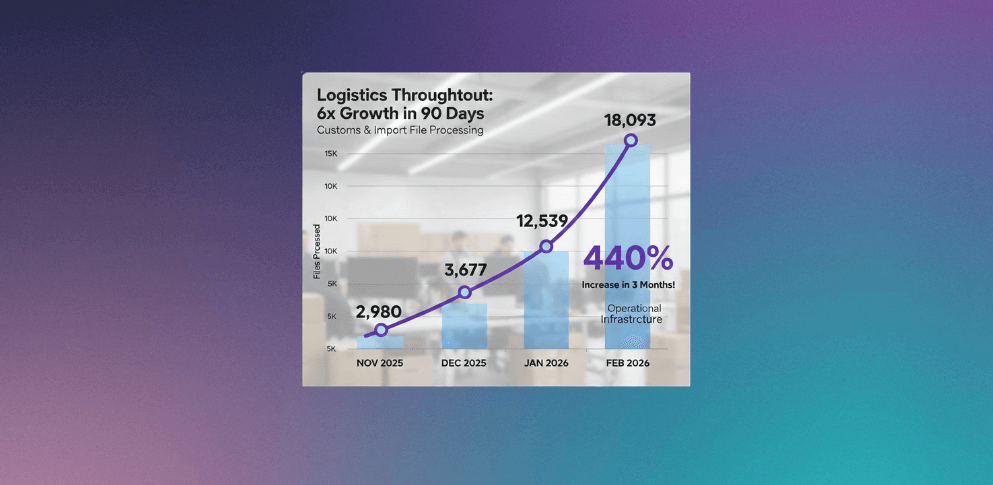
We’ve already seen this feature handle 1,500 cargo files per month, delivering the same output as five full-time teammates. From email to customs, clean and complete. No printing. No folders. No stress.
What This Means for the Future
This wasn’t just a time-saving tool. It changed the way our clients think about their operations. It showed them that robust logistics processes don’t start with customs, they start with documentation.
And now, we’re bringing this same logic to finance and procurement teams. Because they’re struggling too, with scanned stock invoices, handwritten delivery slips, and unstructured goods receipt documents. All that friction at the document level ripples across the business.
DOConvert is here to fix that. One PDF at a time.